

All Matching Courses
All Matching Courses
20 Courses

Ayurvedic Procedures (including Prime treatments in Ayurveda, Tridosa, Ayurvedic medicines, and treatment methods)

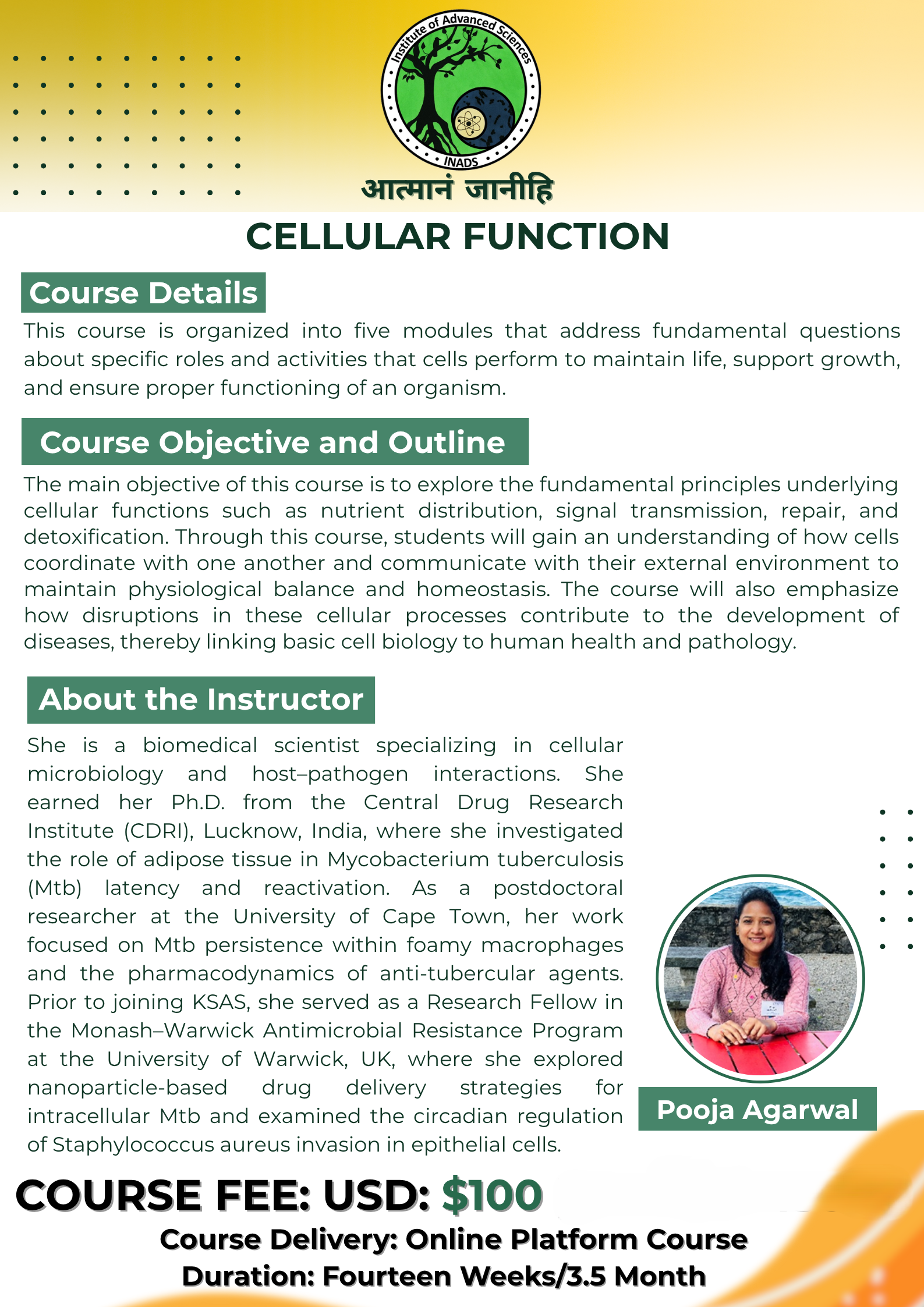
The main objective of this course is to explore the fundamental principles underlying cellular functions such as nutrients distribution, signal transmission, repair, and detoxification. Through this course, students will gain an understanding of how cells coordinate with one another and communicate with their external environment to maintain physiological balance and homeostasis. The course will also emphasize how disruptions in these cellular processes contribute to the development of diseases, thereby linking basic cell biology to humans heath and pathology.
Download Brochure


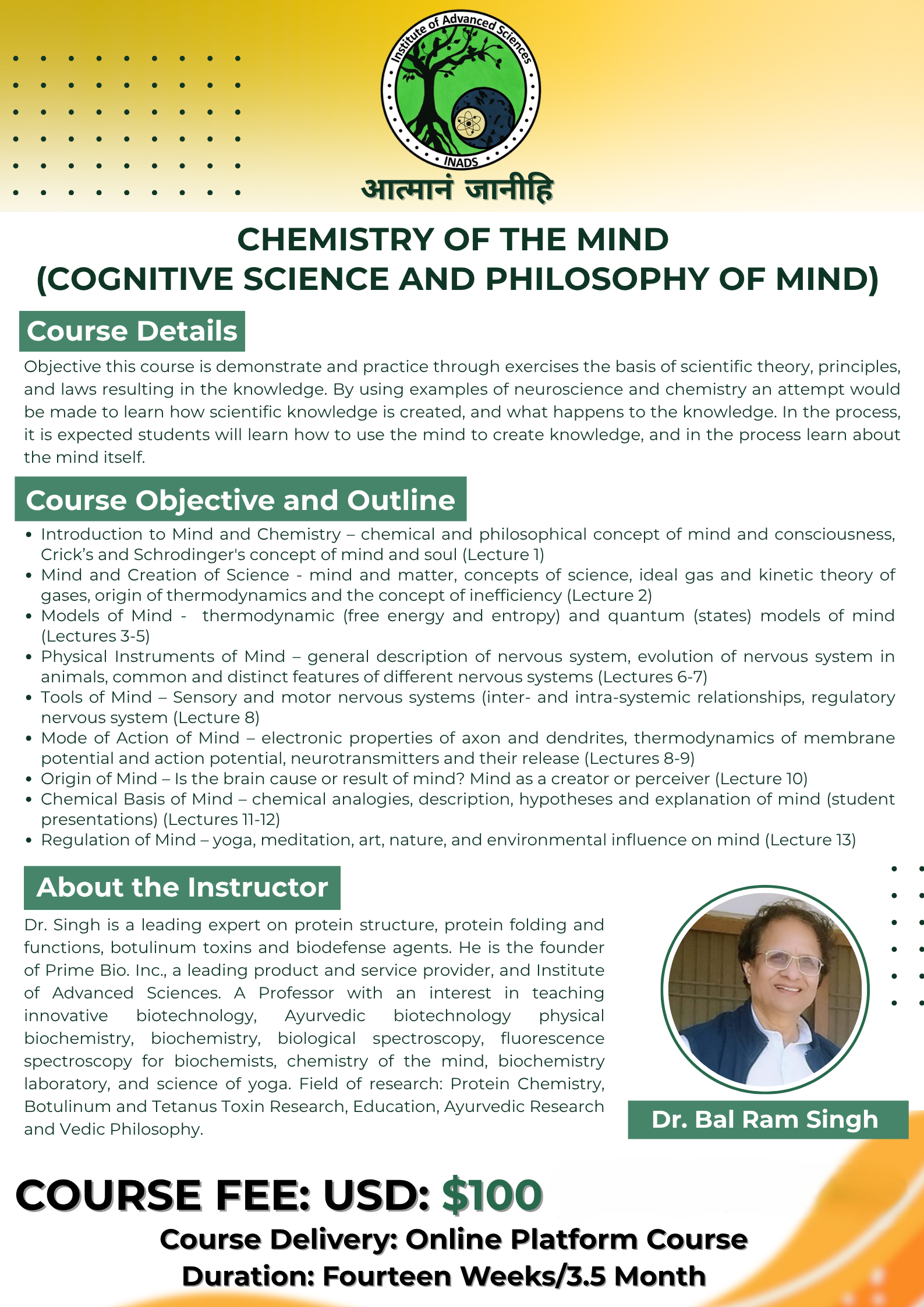
Objective this course is demonstrate and practice through exercises the basis of scientific theory, principles, and laws resulting in the knowledge. By using examples of neuroscience and chemistry an attempt would be made to learn how scientific knowledge is created, and what happens to the knowledge. In the process, it is expected students will learn how to use the mind to create knowledge, and in the process learn about the mind itself.
Download Brochure
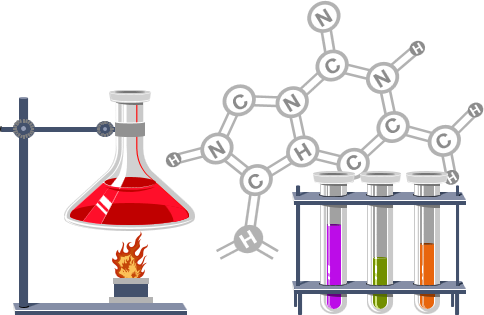
Clinical Biochemistry

Developing Technology Trends (Includes nanotechnology in medicines, biomaterials in tissue engineering, bioinformatics, genomics, proteomics and metabolomics)

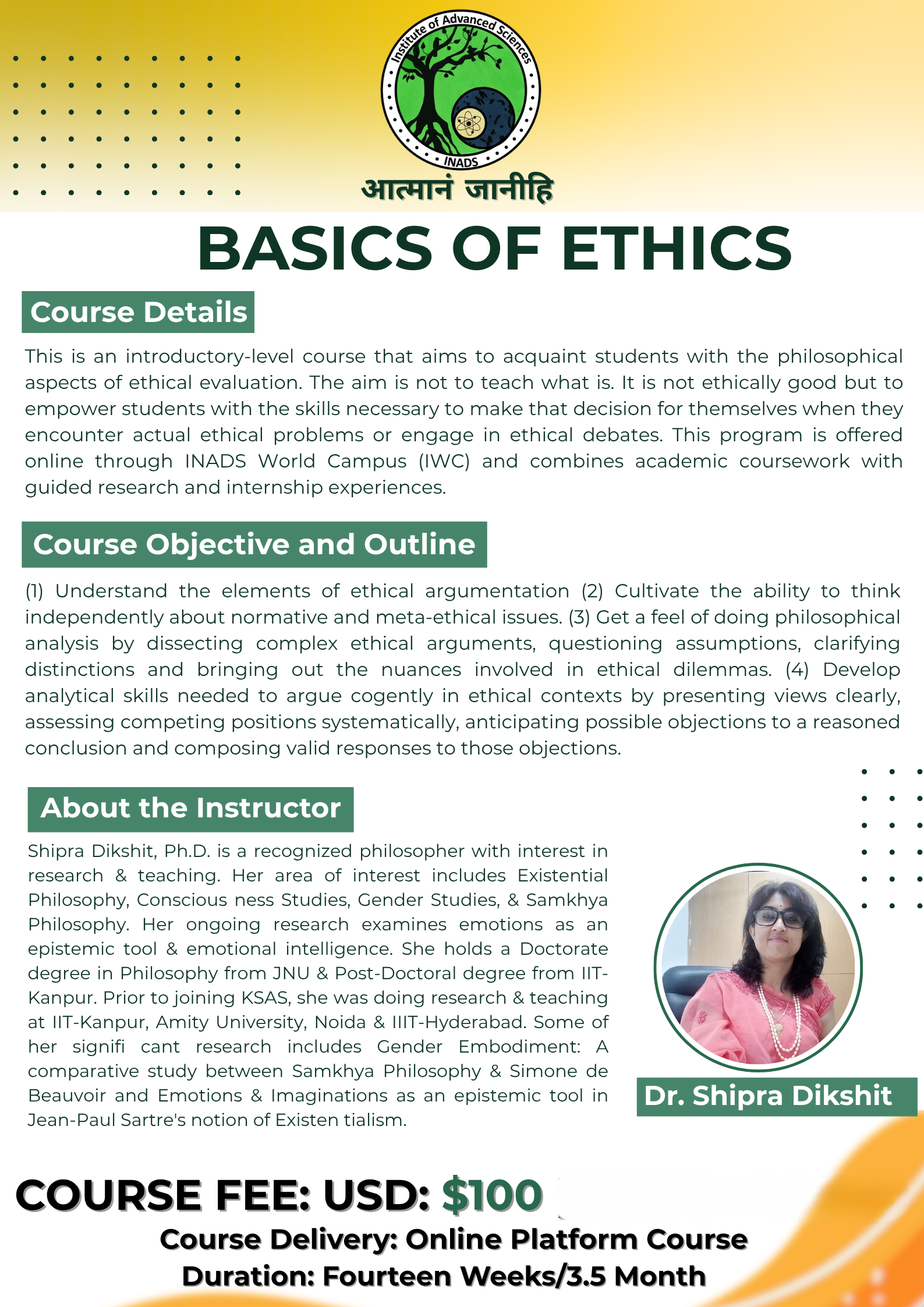
This is an introductory-level course that aims to acquaint students with the philosophical aspects of ethical evaluation. The aim is not to teach what is. It is not ethically good but to empower students with the skills necessary to make that decision for themselves when they encounter actual ethical problems or engage in ethical debates. This program is offered online through INADS World Campus (IWC) and combines academic coursework with guided research and internship experiences.
Download Brochure

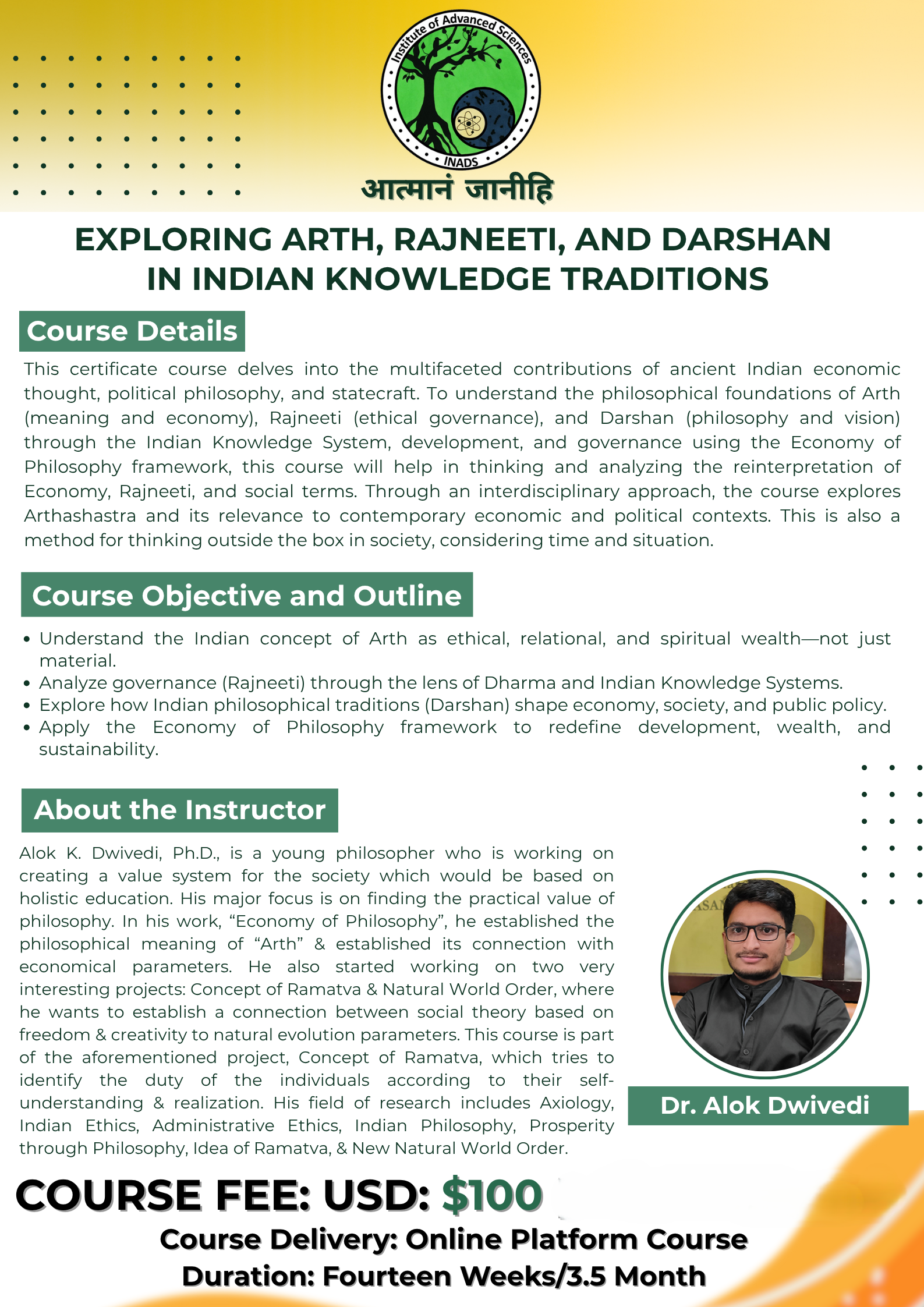
This certificate course delves into the multifaceted contributions of ancient Indian economic thought, political philosophy, and statecraft. To understand the philosophical foundations of Arth (meaning and economy), Rajneeti (ethical governance), and Darshan (philosophy and vision) through the Indian Knowledge System, development, and governance using the Economy of Philosophy framework, this course will help in thinking and analyzing the reinterpretation of Economy, Rajneeti, and social terms. Through an interdisciplinary approach, the course explores the Arthashastra and its relevance to contemporary economic and political contexts. This is also a method for thinking outside the box in society, considering time and situation.
Download Brochure
.jpg&w=3840&q=75)
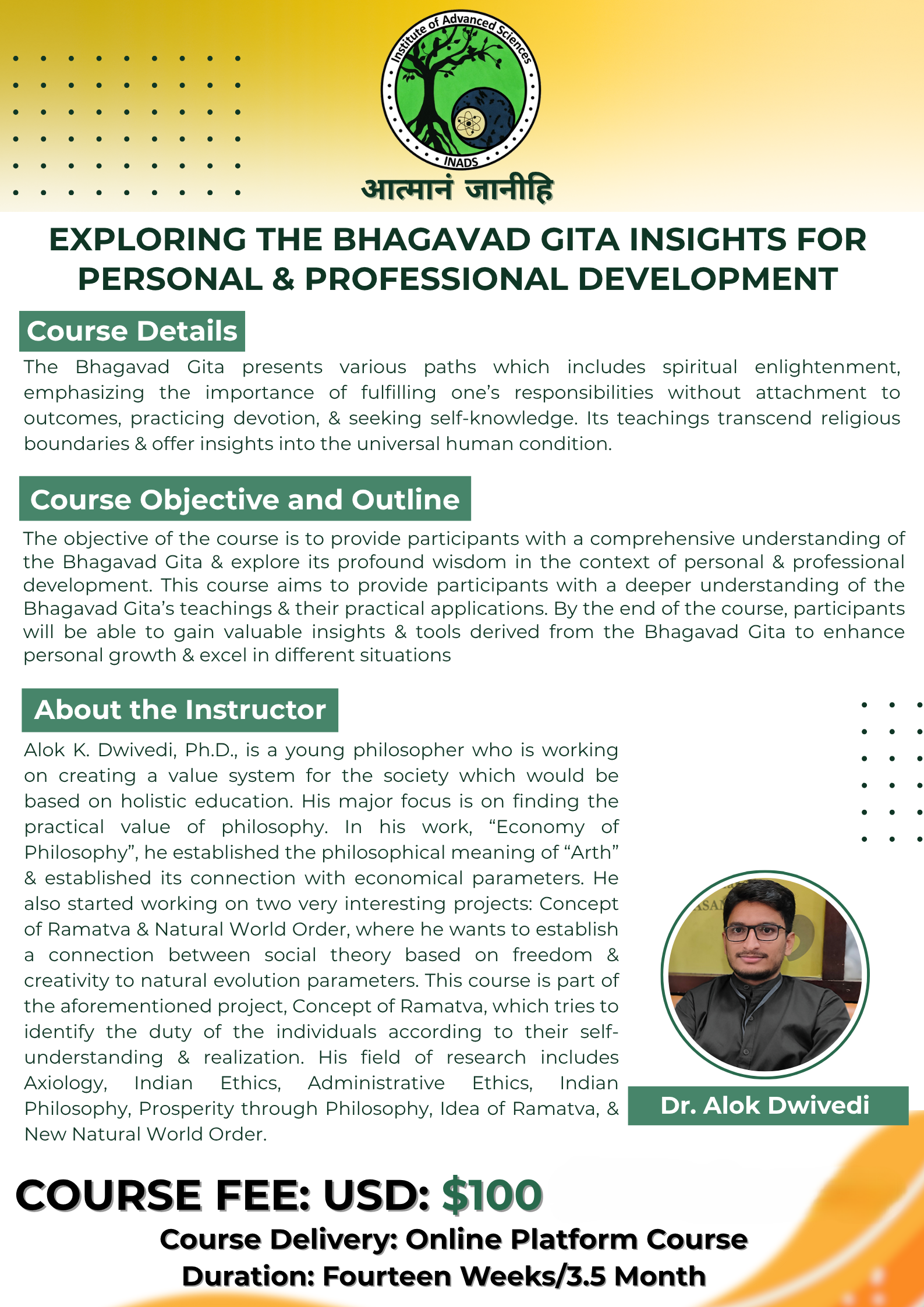
This is a 3-unit course. The objective of the course is to provide participants with a comprehensive understanding of the teachings of the Bhagavad Gita and explore its profound wisdom in the context of personal and professional development. This course aims to provide participants with a deeper understanding of the teachings of the Bhagavad Gita and their practical applications. By the end of the course, participants will be equipped with valuable insights and tools derived from the Bhagavad Gita to enhance personal growth and excel in their professional lives.
Download Brochure

Food and Nutrition
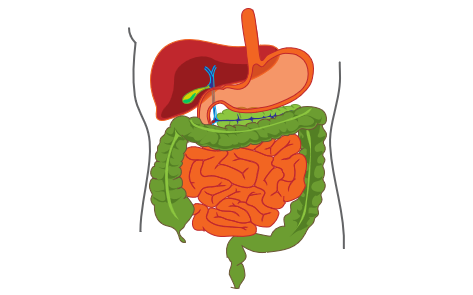
Gastrointestinal tract and Hepatobiliary system (including probiotics)

Ayurvedic Procedures (including Prime treatments in Ayurveda, Tridosa, Ayurvedic medicines, and treatment methods)


The main objective of this course is to explore the fundamental principles underlying cellular functions such as nutrients distribution, signal transmission, repair, and detoxification. Through this course, students will gain an understanding of how cells coordinate with one another and communicate with their external environment to maintain physiological balance and homeostasis. The course will also emphasize how disruptions in these cellular processes contribute to the development of diseases, thereby linking basic cell biology to humans heath and pathology.
Download Brochure
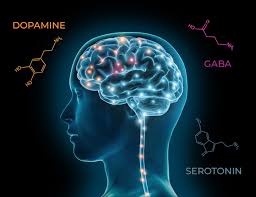
Objective this course is demonstrate and practice through exercises the basis of scientific theory, principles, and laws resulting in the knowledge. By using examples of neuroscience and chemistry an attempt would be made to learn how scientific knowledge is created, and what happens to the knowledge. In the process, it is expected students will learn how to use the mind to create knowledge, and in the process learn about the mind itself.
Download Brochure

Developing Technology Trends (Includes nanotechnology in medicines, biomaterials in tissue engineering, bioinformatics, genomics, proteomics and metabolomics)

This is an introductory-level course that aims to acquaint students with the philosophical aspects of ethical evaluation. The aim is not to teach what is. It is not ethically good but to empower students with the skills necessary to make that decision for themselves when they encounter actual ethical problems or engage in ethical debates. This program is offered online through INADS World Campus (IWC) and combines academic coursework with guided research and internship experiences.
Download Brochure

This certificate course delves into the multifaceted contributions of ancient Indian economic thought, political philosophy, and statecraft. To understand the philosophical foundations of Arth (meaning and economy), Rajneeti (ethical governance), and Darshan (philosophy and vision) through the Indian Knowledge System, development, and governance using the Economy of Philosophy framework, this course will help in thinking and analyzing the reinterpretation of Economy, Rajneeti, and social terms. Through an interdisciplinary approach, the course explores the Arthashastra and its relevance to contemporary economic and political contexts. This is also a method for thinking outside the box in society, considering time and situation.
Download Brochure
.jpg&w=640&q=75)
This is a 3-unit course. The objective of the course is to provide participants with a comprehensive understanding of the teachings of the Bhagavad Gita and explore its profound wisdom in the context of personal and professional development. This course aims to provide participants with a deeper understanding of the teachings of the Bhagavad Gita and their practical applications. By the end of the course, participants will be equipped with valuable insights and tools derived from the Bhagavad Gita to enhance personal growth and excel in their professional lives.
Download Brochure

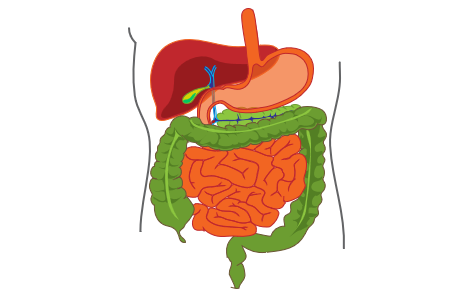
Gastrointestinal tract and Hepatobiliary system (including probiotics)